Wednesday, August 11, 2010
The hardy and pernicious myth of Western designs on Russia
Pundit Sees Attempts to Incite Anti-Western Sentiment as Threat to Russia Itself
Nezavisimaya Gazeta [translation from JRL]
August 4, 2010
Article by Georgiy Mirskiy: "Patriots' Fears -- West Not At All Interested in Weakening Russia"
[Institute of World Economy and International Relations]
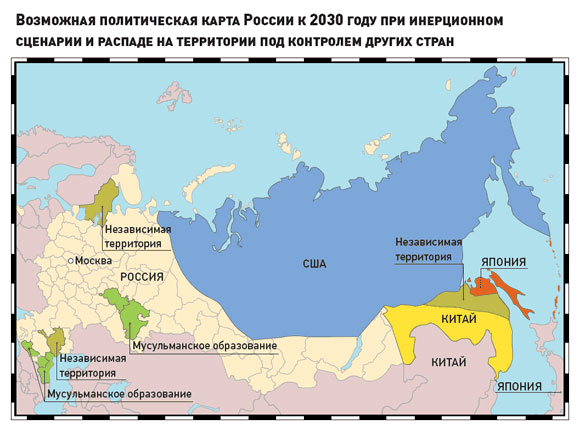
"People want to weaken Russia ... what do you mean weaken it - they want to crush, dismember, subordinate it..." Who among us has not heard such cries? Journalists, TV and radio commentators, parliamentarians, generals, and professors compete with one another in their attempts to convince the Russian people that the West - and especially America - dreams only of causing catastrophic damage to our country, destroying it, taking things away from it. What is particularly interesting is the more our relationship with Western countries improves, the more vigorous and vociferous the counterattack becomes of those who implore: "Do not believe this! It is all lies! They are undermining our vigilance, they want to trap us!" And this mass brainwashing that has lasted for many years must inevitably produce results. In one opinion poll, almost a third of those who answered thought it possible that AIDS had been deliberately brought into Russia by the Americans.
In part, this has been happening since ancient times. In the century before last, when Queen Victoria ruled Britain, if Russia suffered any foreign policy failure, people usually said: "The Englishwoman is playing dirty tricks on us". In the Soviet era, it was customary to use one word to explain any accident - "saboteurs". Generally speaking, the attitude of Russian people to the West has always been ambivalent. Even two hundred or three hundred years ago, they knew that life in Europe was better, even much better. It was an axiom, just as people have always been convinced that customs in Russia will continue to remain as foul as they have ever been. You may recall Saltykov-Shchedrin: "Everybody steals, and at the same time everyone laughs loudly and says: well, where else do you see such an outrage?" But in order to compensate for this inferiority complex, it was necessary to develop the opposite complex - a superiority complex. A few years ago, viewers on one of the central TV channels were asked why it was that we had beaten Germany but the Germans lived better than us. Most of the votes, almost 40 %, went to the answer: "On the other hand, we are more heartfelt".
The conviction that everyone hates Russia and wants to play all kinds of dirty tricks on it is not based on any facts. The author has worked in America for nine years, has talked to the most varied of people, from former high-ranking individuals to black drivers on the Princeton University minibus. I have never heard anything bad about our country, on the contrary - there has always been only one leitmotif to their statements: "How can it be that Russia, such a great country, with such a great culture, with such talented people, with such natural riches, has finally got rid of totalitarianism, obtained its freedom, but we still get bad news from there?"
Of course, there are Russophobes in the West, just as there are anti-Semites and Islamophobes. But anti-American sentiment is also widespread throughout the world, it is enough to talk to French people, Turks, or Latinos; for example, I only actually know of two nations that really have a warm attitude towards America - the Poles and the Iraqi Kurds. But the Americans do not suffer from any complex because this. And we have no reason to complain about a bad attitude by foreigners; if our people do not themselves misbehave, they have a right to expect friendliness and benevolence everywhere.
I can foresee at least two objections: firstly, Americans and Europeans may not have anything against the Russians as a people, but they hate our regime, our state, and, secondly, even if the ordinary people there have some sympathy for us this is not of any significance - the position of politicians, capitalists, and the military is what is important. Well, what can be said in response to this.
It is true that people in America and Britain, for example, do not much like our regime. But do you think that they actually adore their own regimes? They curse them and change them every few years. And in any case, the words "regime" and "love" should not be combined at all, at least in democratic societies. It is usually only dictators and despots who are loved. Liking a ruler of one kind or another is another matter. It seems to me that of all the Russian rulers, only two were liked in the West - Catherine the Great and Mikhail Gorbachev. And the attitude there to the Russian state has since ancient times naturally been ambiguous. Russia seemed all too vast, incomprehensible, and mysterious, some latent threat seemed to emanate from it. The image of the powerful, sinister strength of this huge country has become a stereotype in the West, and when the Soviet Union became the "vanguard of world revolution", and subsequently, having shown its strength in the war with Germany also turned into a nuclear superpower, this image turned into a deadly threat.
But all this is in the past. After the collapse of the Soviet regime, the Western world sighed in relief. No one in the West now believes in Moscow's global imperial threats, or in a suicidal world nuclear war. Admittedly, people have understood there that the current Russian regime is not quite what would be desirable from the point of view of the "civilized democratic world", this is unpleasant and at times extremely disturbing, but in general, it is tolerated. The most important thing is that the insurmountable ideological chasm, the threat of the expansion of "world Communism", has disappeared. Many of the problems in Russia's relations with the West will not be resolved any time soon, but who says that it is impossible to live with unresolved problems?
Things are more difficult, at first glance, with the second argument: people say that American politicians, generals, and the military are fundamentally unable to reconcile themselves to the existence of a strong independent Russia, they want a weak Russia, or even better - one that has completely collapsed. Is that the case?
Let us imagine this scenario for a moment: everything works out for our foes, they have brought about a catastrophic weakening of Russia. But what is a weakened Russia? It is an economically degraded, impoverished, decaying country with a desperate, angry, embittered population. The question is: in which direction will the population turn, who will it heed, who will it follow? The pro-Western liberals, the democrats? There is no question of even talking about this, it is they who will be blamed for all the misfortunes, the potential support-base of Western ideological influence will be smashed to pieces. The Communists? Only partially, the baggage they carry from the Soviet era is just too unattractive. No, the people will follow the extreme nationalists, they will heed their xenophobic Nazi-tainted appeals. Hatred of the West, which "destroyed the Soviet Union and is now destroying Russia", will increase one-hundred-fold. The Nazis will not be able to break through into the real leadership of the country, but their influence on the ruling elite will increase to an enormous extent. But at the same time, no matter how weakened Russia might be and whatever pieces of it might fall off, Moscow will still retain the atomic and the hydrogen bomb. So you have a pretty picture: a poor, decaying country, seething with hatred for the West and all the "crappy democratic" countries there - but one with nuclear weapons. What could be worse for the West than such a scenario? And surely the West understands this, does it not?
They understand it very well, this very idea has been touched upon in many conversations. Tom Friedman of the New York Times wrote: "We do not fear a strong Russia, what is dangerous for us is a weak Russia, in which a missile could fall off the back of a truck and turn up somewhere in Iran". That is why Western diplomacy will, reluctantly and occasionally wincing, continue to do business with today's Russia, as the lesser of the possible evils. After all, is easy to imagine what horrific, truly apocalyptic consequences the disintegration of Russia could have, the emergence of new state e ntities that devour one another, the explosion of Islamist extremism in some of them, etc. The modern world, which is extremely agitated anyway, would turn into a nightmare.
"That would be good for the West," some people will say, "the Americans will be fishing in troubled waters, they will get rid of Russia as a competitor, and they will lay their hands on our natural resources." Here, it has to be said that there is little that can be compared in its absurdity to the argument that is often used about Russia being a competitor that must be finished off. What kind of a competitor are we, for goodness sake, and to whom? We export oil, gas and weapons - and there is enough room on the world market for everyone here. And in the most important sphere in the modern world, high-tech and knowledge-based production - where are we, in what place? When we have created Skolkovo, we will compete on an equal footing with America - so that will be when hell freezes over. And even if Russia were a serious competitor - so what? Look at China - it really is a competitor to everyone, the entire world is piled high with Chinese goods, but no-one intends to undermine, weaken or break up China.
The trouble for our apologists of fighting the West is that they are living with yesterday's realities, if not those of the day before yesterday, they do not understand how the world has changed. They still think there is nothing more important for the imperialists than, for example, seizing our Siberian oil. But any manager of a transnational oil company would have a heart attack as soon as he really imagined that he would have to deal with producing and transporting oil in the remote expanses of Russia. And seizing territories, establishing military bridgeheads - all of this is obsolete, like airships or gramophones.
The question then arises: why are all our hate-mongers, all the political scientists, journalists, and deputies "attached to the Kremlin" creating such an uproar? One of the explanations is understandable: the Soviet mentality is operating with its built-in mechanism that ensures the constant maintenance of the required level of anti-Americanism. What is amusing is that this anti-Americanism is for the most part affected and hypocritical. These people are now actually travelling to the West, they are prepared to fly off to America at the first invitation, their children study at British and American colleges, many of them have a lot of money in Western banks, and even real estate somewhere there. But when they return from their latest trip, they consider it their duty to "sling mud at" America, those are the rules of the game. Yes, and they get signals from above - saying there is nothing more useful for mobilizing the people around the party and the government than pedalling the external threat. And nobody thinks that this kind of game might be harmful within the country, for a population which is already clearly morally degraded. Xenophobia, inciting hatred towards "strangers", whether they are Caucasians or Americans, will inevitably lead to an increase in aggression and intolerance in society, which sociologists have long been sounding the alarm about. The "hardening of the hearts" of the younger generation is a threat not so much to the "Western enemy" as to Russian society itself.
Sunday, August 08, 2010
"Black PR" lives...
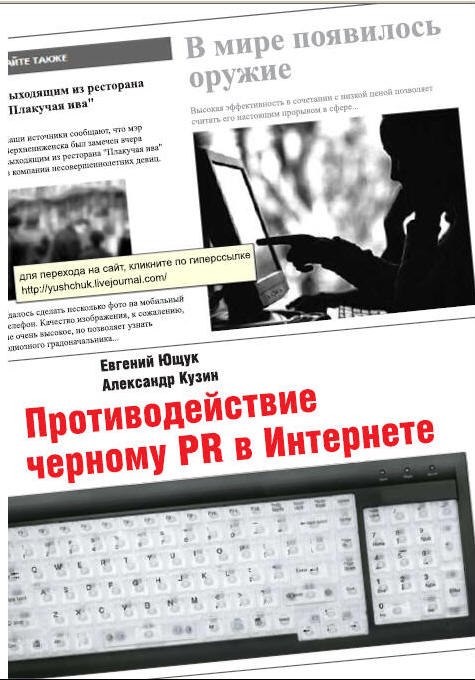
The article below reminded me of how widespread the concept of "black propaganda" or "black PR" is in Russian political life (and in the competitive world of business as well). The term is sort of a catch-all for any kind of "dirty" campaign tactics, from American-style opposition research, "dirty tricks" and negative campaigning to mud-slinging, sabotage and the dispensing of kompromat. Anyway, I found more illustrations for a post on this topic than I expected - all of the images here are book covers, which suggest that fictional accounts of and instructions related to "black PR" - and how to defend yourself from it - are in demand in Russia. As a bonus, here are a couple of fliers which serve as examples of "black PR" in Moldova; and the second image at this post is one from the 2004 campaign in Ukraine.
BBC Monitoring [courtesy of JRL]
Woman appeals to Putin, says One Russia owes her for 'black propaganda' - RenTV
August 2, 2010
A scandal has erupted in Suzdal, Vladimir Region over last year's mayoral elections, Russian privately-owned REN TV reported on 2 August. A young woman, Vera Nesvyashchenko, has written to Prime Minister Vladimir Putin, complaining that she has not been paid for work she carried out for the One Russia party during the election campaign, which involved destroying opponents' campaign materials, and that the work she was asked to do was not entirely legal.
"The letterboxes were checked, there were some campaign materials there, we removed them; there were posters hanging on the poles, we tore them down and (it became) waste paper. All of the waste paper we brought to the headquarters, to the town library," she said.
Nesvyashchenko admits that she was engaged in "black propaganda", the correspondent notes. She was recruited by One Russia to work on the mayoral elections in August 2009 and was promised R7,000 (235 dollars) to destroy opponents' campaign materials, plus a bonus of R7,200 to compile a list of people who were intending to vote for One Russia's candidate Olga Guseva.
Nesvyashchenko also says that she and her colleagues questioned the legality of their actions but were assured that everything was above board.
"Tatyana Aleksandrovna said that it's no problem. The period of validity for campaign posters is three hours so you can safely clean up the streets," she said. "Only in court did I find out that it was illegal and hooliganism," she added.
The correspondent noted that 5,000 people (52 per cent of the overall number of voters) cast their ballots in the mayoral election in Suzdal - a record turnout.
"At the finish, the gap (between the candidates) was minimal. Olga Guseva received just 111 votes more than her opponent Oleg Grigorenko. It is not known what the state of affairs would have been, if there had not been the so-called guards (referring to Young Guard, the youth wing of the ruling One Russia party) and their mass clean-up operation."
Grigorenko unsuccessfully appealed against the election result, the correspondent noted.
The head of the regional branch of One Russia, Sergey Borodin, called Nesvyashchenko's actions "provocation". However, the former mayor of Suzdal, Sergey Gadunin, who held the post from 2005-2009, defended her.
"I have read some commentaries which said that this is an attempted smear on the part of the opposition. You know, the opposition can have a rest. There is no need to do anything more. The party is discrediting itself in such a way that there are simply no further words," Gadunin said.
Nesvyashchenko is also preparing a lawsuit, demanding the payment of the R14,200 and a further R5,000 for moral damage.
Friday, August 06, 2010
Twittering while Russia burns
It was interesting to see the translated article below appear in JRL on the same day as Svetlana Babaeva's piece appeared dismissing the political impact of social networking and new media in Russia ("nothing more than banal social chatter"; "inconsequential prattle").
My value add in the article below is to link to the Twitterings of these government luminaries (other than Medvedev, since I can't be fussed to figure out which is the real one, and Astakhov, since I couldn't locate his using any of the obvious search terms) - and to point out that there is an aggregator-type Twitter account called gosblogi for Russian official Twitterers. I would also note that the only one of these guys I really try to follow is Rogozin - he is a master of the form and often manages to display his sense of humor in 140 characters or less. Though somewhat confusingly, he appears to have two accounts - the one linked in the previous sentence and this one.
And my purpose is, in part, to plug my very own new Twitter feed (in which, of course, I will tweet a link to this post, while praying that the universe does not collapse upon itself or get stuck in some sort of infinite loop of narcissism). You can see recent tweets in the sidebar and the whole thing here - http://twitter.com/scrapsofmoscow
Twitter Takes Off Among Russian Politicians
Izvestia [translation courtesy of JRL]
July 29, 2010
Report by Aleksandra Beluza: Authorities of Short Messages
The Twitter era has begun in Russian politics. In the wake of President Dmitriy Medvedev, who launched his micro blog in June, governors and other highly placed figures have arrived there. A round the clock personal broadcasting channel, which is what Twitter essentially is, can be used during elections to mobilize the population when actions are being conducted.
Thanks to Twitter (from the English "to twitter") politicians all over the world are "taking off their jackets" and giving us the chance to see a stream of their personal news. Here is Dmitriy Medvedev writing about his visit to Belgorod Oblast: "I flew in to Alekseyevka. I went to the graves of my great grandmothers and great grandfathers. I was going for the first time. For work, as always." Now Medvedev has over 50,000 regular readers on Twitter.
Medvedev himself reads the micro blogs of US President Barack Obama and Canadian Prime Minister Stephen Harper. But presidential aide Arkadiy Dvorkovich believes that it is precisely the Russian leader who has the best Twitter. "None of the leaders is comparable," Dvorkovich wrote on his own Twitter. "Where else will you see a photo taken by him personally (Medvedev -- Izvestiya)?" A picture called "view from the window of my hotel" taken by Medvedev in San Francisco has already been viewed almost 233,000 times, for example. Dvorkovich himself also posts a lot of photographs on his micro blog. He also writes quite openly -- for example, that "it is very hard to sleep after a week's tour in North America, but it is harder for the president."
"What does Twitter give you? Why are you ready to spend time on postings?" Izvestiya asked Dvorkovich on Twitter.
"Not a great deal of time is spent, but the ability to set out thoughts and share them concisely is developed," the presidential aide responded before five minutes had passed.
There are already around 20 senior Russian politicians and hundreds of officials at the level of deputies and heads of departments, including in the regional administrations, and also mayors, on Twitter. However, it is not pleasant to read all the micro blogs. Out of 10 governors only three write really interestingly -- Nikita Belykh (Kirov Oblast), Dmitriy Zelenin (Tver Oblast), and Mikhail Men (Irkutsk Oblast). Zelenin in particular distinguished himself by simply writing the following after Medvedev's departure from the Seliger youth camp: "The boss has left. The Tver forum and Seliger went well. I feel like a horse at a wedding -- with my muzzle in the flowers, and myself in a lather."
" Twitter has become a little personal news agency for politicians," managing partner of the Sotsialniye Seti (Social Networks) agency Denis Terekhov believes. "And here it is a question of information openness -- is the person ready to write quickly and without coordinating, without thinking about whether he has said it right or wrong 10 times? I think politicians who join Twitter are a priori more open than others. In this sense Twitter can be an acid test."
Essentially Twitter today is a test of a politician's openness -- is he ready to show that he is a person like everyone else? Mikhail Men admits: "I listened to (singer Vladimir) Vysotskiy all day." Dmitriy Rogozin, Russia's permanent representative to NATO, writes: "I have arrived in Moscow for a week's vacation; 360 degrees Centigrade (as published) is not that hot. It has been hotter at our NATO sessions." Pavel Astakhov, the ombudsman for the rights of the child in Russia, characterizes his secretariat like this: "I have 12 women working for me. I call them the 'child's special purpose troops.'"
There are only two party leaders here, Sergey Mironov, speaker of the Federation Council and the head of Just Russia, and Vladimir Zhirinovskiy, leader of the Liberal Democratic Party of Russia (LDPR). They both write every day, but somewhat turgidly. Denis Terekhov believes that "the part ies are quite sluggish and it is hard for them to use Twitter as a real channel of communication." In the opinion of other experts, Twitter could attract them not so much as an information technology as a mobilization technology.
"Many politicians are seeking communication with their target audience here -- the middle class and young people," Dmitriy Badovskiy, the deputy director of Moscow State University's social systems scientific research institute, says. "Plus Twitter gives an instant link with quite a big audience. And this makes it possible to gather supporters, coordinate observers at elections, and publish current information quickly. So I think that as the elections approach, activity and testing of Twitter as a possible environment for political mobilization will increase."
The 10 most popular Russian politicians on Twitter (by number of micro blog followers):
Russian President Dmitriy Medvedev 52,896
Russian's permanent representative to NATO Dmitriy Rogozin 7,513
State Duma Deputy Konstantin Rykov 3,769
Federation Council Speaker Sergey Mironov 2,084 [strangely seems to have protected tweets]
Tver Oblast Governor Dmitriy Zelenin 1,988
LDPR leader Vladimir Zhirinovskiy 1,716
Kirov Oblast Governor Nikita Belykh 1,489
Presidential aide Arkadiy Dvorkovich 1,309
Perm Kray Governor Oleg Chirkunov 812
Children's Ombudsman Pavel Astakhov 535
Perhaps tweeting is, for Russian officials in the era of Medvedev, something akin to
taking up tennis under Yeltsin or becoming a martial arts beast / skier under Putin.
Wednesday, August 04, 2010
More on "peacekeepers" vs. "occupiers"
[image source]
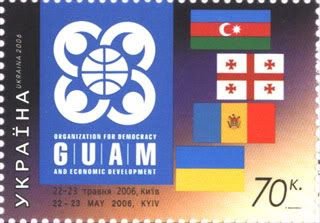
GUAM appears to be DOA, of course, but the article below suggests some degree of
coordination between MD and GE's Russia policies. I'm not sure I buy it, particularly as
I think the article overstates Acting President Ghimpu's influence on MD foreign policy.
And is wanting Russian troops to leave territory one claims as its own sufficiently strange
of a policy preference as to suggest that it must be the result of a coordinated campaign?
GUAM appears to be DOA, of course, but the article below suggests some degree of
coordination between MD and GE's Russia policies. I'm not sure I buy it, particularly as
I think the article overstates Acting President Ghimpu's influence on MD foreign policy.
And is wanting Russian troops to leave territory one claims as its own sufficiently strange
of a policy preference as to suggest that it must be the result of a coordinated campaign?
Nezavisimaya Gazeta [translation courtesy of JRL]
August 2, 2010
KISHINEV AND TBILISI NEVER NOTICED MOSCOW'S PROTESTS
Moldova and Georgia demand withdrawal of the Russian military from what they call their territories
Author: Svetlana Gamova
MOLDOVA AND GEORGIA COORDINATE THEIR RUSSIAN POLICIES
Their relations with Russia already soured, Moldova and Georgia got international support. The matter concerns the report on arms control agreements the U.S. Department of State published last Wednesday. The document mentioned presence of the Russian troops on the territories of Moldova and Georgia without their consent. By and large, the thesis in question repeated what State Secretary Hillary Clinton had said about occupation of Moldovan (Trans-Dniester region) and Georgian (Abkhazia and South Ossetia) territories by the Russian military. This statement was made when acting president of Moldova Mihai Ghimpu signed a special decree calling the Russian contingent in the Trans-Dniester region "occupiers" and demanding its withdrawal. The Russian Foreign Ministry then reiterated Moscow's official stand on the matter and gave the floor to Gennadi Onischenko of the Rospotrebnadzor.
Onischenko's words made it plain that Kishinev's objections to the presence of the Russian military in the Trans-Dniester region might cost it dearly. Russia suspended import of Moldovan wines - just to make the point. The Moldovans arranged negotiations to discuss the matter but the effort was wasted. That was when Clinton made her statement and urged Russia to start honoring its obligations. Her words killed the last chance the Moldovans might have had then to reactivate wine export to Russia.
Russian Foreign Ministry called "incorrect" U.S. Department of State's speculations on the presence of the Russian military in Moldova and Georgia. "There are no Russian soldiers in Georgia. As for Abkhazia and South Ossetia on whose territories Russian military bases operate with their consent, these countries are
neither parts or Georgia nor signatories of the Treaty on Conventional Armed forces in Europe." The Foreign Ministry reiterated that Russian peacekeepers were on the Dniester in accordance with the agreement between Russia and Moldova (July 21, 1992). The Moldovan authorities demand withdrawal of the Russian
military contingent and peacekeepers from the self-proclaimed Trans-Dniester Moldovan Republic in the hope to replace them with an international police force.
In any event, official Kishinev studiously ignored all objections and protests from Russia. Moreover, it chose to comment on the conclusions drawn in the U.S. Department of State's report in application to the conflict with Tiraspol. Kishinev no longer accepts the terms formulated by Moscow (conflict resolution first, evacuation of the military afterwards). Moldovan Ambassador to Romania Yuri Renice told the Romanian newspaper Adevarul, "Synchronization of the Russians' withdrawal with Trans-Dniester conflict resolution is a thoroughly counterproductive approach...Presence of the Russian military collides with the principle of neutrality promoted by the Constitution. Most Trans-Dniester residents stand for reintegration of the territory."
Trans-Dniester Foreign Ministry in the meantime appealed to the UN to recognize sovereignty of the Trans-Dniester Moldovan Republic in the light of the recent ruling of the International Court of Justice regarding Kosovo. "Our position is clear: the Trans-Dniester region is part of Moldova," said Renice.
Georgia took Washington's position as a clear confirmation: there are no sovereign Abkhazia and South Ossetia, there are but regions of Georgia occupied by Russia. Ghimpu said that he would pay an official visit to Tbilisi before long. It is clear that Kishinev and Tbilisi intend to coordinate their Russian policies.
Tuesday, July 27, 2010
Another "Sexy Russian Spy"? Exclusive photos here!
Regular readers of this blog know that I try to keep things classy here. However, I've seen my esteemed Russia-blogger peers make hay on the Anna Chapman story and will not get scooped again!
It seems that another young Russian lady has been detained on suspicion of espionage, and this one also seems to have enjoyed posting revealing photos of herself on the internet. Never mind that she was apparently born in Latvia and is a U.S. citizen, Gawker already has the Facebook photos of our "New Sexy Russian Spy," Anna Fermanova. But Gawker must not know about Odnoklassniki, which has this photo of the latest innocent-until-proven-guilty victim of spymania - and more!
After the jump are some more photos of Ms. Fermanova that Gawker couldn't show you. As of now, they appear to be available online only here. Ah, I knew I would be proud of this blog someday...
It seems that another young Russian lady has been detained on suspicion of espionage, and this one also seems to have enjoyed posting revealing photos of herself on the internet. Never mind that she was apparently born in Latvia and is a U.S. citizen, Gawker already has the Facebook photos of our "New Sexy Russian Spy," Anna Fermanova. But Gawker must not know about Odnoklassniki, which has this photo of the latest innocent-until-proven-guilty victim of spymania - and more!
After the jump are some more photos of Ms. Fermanova that Gawker couldn't show you. As of now, they appear to be available online only here. Ah, I knew I would be proud of this blog someday...
![]() |
| It's a well-known fact that alleged spies prefer bottle service. |
![]() |
| Camo skirt = military background? |
![]() |
| A Bond-worthy getaway vehicle. |
![]() |
| License to kill. |
![]() |
![]() | |
| They use benches like this for dead-drops, right? |
![]() |
| Red Sea? |
![]() |
| Military training... |
![]() |
| Preparing to visit handlers in the Kremlin? |
![]() |
| Showing some secret agent attitude. |
Wednesday, July 07, 2010
Post-gaming Hillary's visit to the Caucasus
Nezavisimaya Gazeta
July 7, 2010
RELOAD FOR SOUTH CAUCASUS [Translation courtesy of JRL]
Washington had better bear in mind differences in psychological makeup and mentality of the local countries
An update on U.S. State Secretary Hillary Clinton's tour of the Caucasus
Author: Alexander Karavayev
EVERY COUNTRY OF THE SOUTH CAUCASUS COUNTS ON WASHINGTON'S ATTENTION TO ITS PROBLEMS
U.S. State Secretary Hillary Clinton's visit to the Caucasus was supposed to have a sedative effect on the anxious local regimes. Pointed attention from a world power is always flattering. Discounting George W. Bush's visit to Tbilisi, there have been no visits from high functionaries of American administrations to the region in a decade. Every country of the South Caucasus pins high hopes on the United States and expects from it sympathy with regard to local problems and particularly in connection with territorial issues.
On a stay in Baku, Clinton spoke of Washington's willingness and firm resolve to facilitate a peaceful resolution of the Nagorno-Karabakh conflict. When in Yerevan, she guaranteed the hosts America's support in the same process. In Tbilisi at last, Clinton assured Georgia of America's solidarity with it. Her statement there became recognition of the status quo. The United States is Georgia's ally but not even the United States can change anything in the situation at this point or help Tbilisi reintegrate Abkhazia and South Ossetia.
Putin's elite and Saakashvili's regime are diametrically polar in everything but the desire to set foreign policy for years to come. The only difference is that political life in Georgia is less rigid because the Georgian regime does permit existence of the opposition. It stands to reason to assume that Clinton brought a message to Saakashvili that Washington will welcome his efforts to normalize relations with Moscow. All things considered, however, making general statements is Tbilisi's only option. Moscow in its turn is convinced that it is better off without all and any contacts with Saakashvili.
The Karabakh conflict situation is certainly different. Where this problem is concerned, Russia and the United States are more or less neutral intermediaries. A broad assortment of options is available here - positive (encouragement of the Azerbaijani-Armenian peace) and negative alike.
In fact, two momentous events preceded Clinton's visit to the region. Presidents Dmitry Medvedev, Barack Obama, and Nicolas Sarkozy made a joint statement regarding Karabakh during the G8 summit. Fighting had occurred along the line-of-contact a week before that, right when president Serj Sargsjan and Ilham Aliyev were meeting in St.Petersburg. This clash might be interpreted as a hint at probability of military escalation in case peace efforts failed.
Granted that Azerbaijan and Armenia remain obstinately deaf to most arguments, there nevertheless exist principles of conflict resolution that are quite promising. The declaration made the three presidents plainly stated the necessity of the return of occupied Azerbaijani districts around Karabakh and interim status of the enclave with adequate guarantees of security and self-government. Establishment of a corridor connecting Armenia and Karabakh and return of all refugees to their homes are other priorities. That might necessitate a humanitarian-peacekeeping mission headed by OSCE Minsk Group countries. Last but not the least, foreign intermediaries believe that the future legal status of Karabakh ought to be decided at a referendum. Official Baku took the document with barely concealed enthusiasm even though its Russian translation somehow managed to miss the term "occupied".
Ethnic peace is difficult to establish - but possible all the same. Karabakh peace project will become an expensive political investment for Moscow and Washington and, also importantly, a serious financial strain on Baku. Infrastructure of the districts in question will have to be rebuilt from scratch. Foreign specialists will have to be found and brought in to consult in refugee-return matters and peaceful co-existence of two ethnic communities. Problems are a legion, but they must be addressed without delay...
Armenia fears that the suggested return of occupied territories adjacent to Karabakh will put Azerbaijan in a position to launch an outright offensive and try to reconquer Karabakh. It seems unlikely that Baku will want to disrupt peace process just when it has begun to bear results. Aliyev is not Saakashvili.
An optimistic take on the fights over New START ratification breaking out in Washington & Moscow
[See here for criticism of Romney's "aggressively chuckleheaded," "dumb" attack on the treaty - though of course AGT had the first word on this one]
Kommersant
July 7, 2010
PROOF BY OPPOSITION (translation courtesy of JRL)
CRITICISM OF START TREATY MIGHT FACILITATE ITS RATIFICATION
Author: Vladimir Soloviov
The Duma began preparations for START ratification. The same process is under way in the United States. In fact, the American legislators are making even better progress with ratification procedures than the Duma. Critics of the Russian-American treaty are having a field day, condemning the document at the earliest opportunity. Strange as it might seem, but their activeness may actually facilitate ratification. Arguments of START enemies in both countries successfully neutralize one another so that neither signatory feels to be left behind in the disarmament race.
The first START parliamentary hearing in Moscow reactivated ferocious criticism of the document. Mitt Romney, ex-governor of Massachusetts and Republican candidate for U.S. president in 2008, is the leading force behind the opposition to the document in the United States. The day the Duma launched debates over START in Moscow, The Washington Post featured a piece by Romney titled "Obama's Worst Foreign Policy Mistake".
Romney does not mince his words, condemning the treaty Barack Obama regards as his best accomplishment so far. What particularly disturbs Romney is that the document interferes with development of the American ballistic missile defense system, a shield from "nuclear-proliferating rogue states" like Iran and North Korea. He said that America all but had to go to Russia for the permission to expand its ballistic missile defense framework. Besides, the politician announced that Moscow stood to gain much more than Washington from the new START treaty. (The document does not apply to Russian mobile ICBMs and launchers, nor does it ban their launch from bombers.)
As a matter of fact, weak points of the START treaty listed by Romney are constantly elaborated on by all other enemies of the document. They appear to be particularly enraged by acknowledgement of a connection between offensive weapons and ballistic missile defense capacity which is what the Kremlin takes pride in.
Russian enemies of the treaty with America went public yesterday. Leonid Kalashnikov, Assistant Chairman of the Duma's Committee for International Affairs (CPRF faction), condemned the treaty for the failure to impose restrictions on American sea-launched long-range guided missiles.
Deputy Foreign Minister Sergei Ryabkov contributed to the criticism too and made a speech explaining to critics cross the ocean what about the START treaty placed Russia at such a disadvantage. Ryabkov admitted all of a sudden that "... Moscow has never intended to use this treaty to restrict development of the American ballistic missile defense framework, global framework included." "The treaty includes no such restrictions," said the senior diplomat who had recently extolled the document in question for the connection between offensive and defensive weapons.
Diplomatic sources attributed so dramatic a change to "the game being played with the United States, one aiming to neutralize enemies of the ratification." "We watch and listen to what they are saying on the subject, right? And so do they. There is an element of a game in all of that," said a source, a functionary who had accompanied President Dmitry Medvedev to the United States last month and participated in START ratification consultations there.
In other words, the Duma permits START enemies to speak up in the hope that they will be heard across the ocean.
The American Senate in the meantime is somewhat ahead of the Duma in Moscow in terms of ratification procedures. "Yes, we know that they are making better progress," said Ryabkov. "We are trying to catch up and synchronize the two processes. The sooner this phase is over, the better. It will strengthen positive trends in our relations."
Mikhail Margelov, Federation Council's Committee for International Affairs Chairman who is constantly in touch with the American colleagues, said that the document compiling positions of three senatorial committees was going to appear in the near future.
The Kremlin is fairly optimistic too. "Appearance of our president before the American Senate was a success. Both Republicans and Democrats demonstrated willingness to advance the bilateral relations," said Medvedev's Press Secretary Natalia Timakova.
Specialists nevertheless comment that the arrangement of forces within the U.S. Senate might generate problems yet. After all, the American legislature is not even nearly as faithful to the White House as the Duma is to the Kremlin.
Tuesday, July 06, 2010
Whither the "Near Abroad"?
A couple of translations from today's Johnson's Russia List:
Rossiiskaya Gazeta
July 6, 2010
FAR AWAY AND CLOSE BY
CIS countries hold little interest for Russia
Author: Leonid Radzikhovsky
RUSSIA: CIS COUNTRIES HAVE BEEN OFF THE PRIORITY LIST FOR A LONG TIME NOW
When the recent Russian-Belarussian gas war broke out, pointless but no less ferocious for that, President Dmitry Medvedev was away in California prior to attending G8 and G20 meetings.
What is closer to Russia then - California or Belarus? And what is more important? As a matter of fact, Russia removed CIS countries off its list of priorities long ago.
Trade with post-Soviet countries accounts for only 17% of the total volume of Russian trade with foreign countries. Major recipients of Russian export include (in the descending order) the Netherlands, Italy, Germany, Turkey, and finally Ukraine. Major suppliers to Russia are China, Germany, Japan, and finally Ukraine.
Neither does the Commonwealth offer anything sufficiently interesting to Russian investors. Economies of most post-Soviet countries are so weak and legislations so bizarre that Russian businesses know better then invest in neighbors. Ukraine is probably the only exception. Roman Abramovich and Alisher Usmanov did procure some assets in Donbass there; Ukraine's Antonov Company recently joined the Russian United Aircraft Corporation.
As for human contacts, approximately 20 million Russians visited distant foreign countries and about 13 million chose CIS countries in 2008 (no hard data on 2009 travel yet).
Where political relations are concerned, the overall situation is no better. Everyone remembers conflicts with Georgia (and not just verbal conflicts, unfortunately), Baltic states, Poland, Ukraine (under its previous president), and the permanent "brotherly" quarrel with Belarus. Compared to that, Russia's relations with major European countries, China, India, Japan, Middle East countries, African and Latin American states are but exemplary.
So is the relationship with the United States. There are no trade, political, or even information wars between our countries any more. Attitude toward the United States in Russia is changing for the better. Forty-six percent Russians did not see the United States as an adversary a year ago. These days, they already number 59%.
Conclusions:
1. Russia has many more common economic interests with the European Union, China, and America than with its CIS neighbors;
2. conflicts with CIS countries vastly outnumber quarrels with distant foreign countries.
What about the Commonwealth being a zone of Russia's special interests or zone of influence then? The impression is that the Kremlin means to establish Russian domination of the post-Soviet zone. Forget it. No post-Soviet country will put up with it anymore. Political establishments throughout the Commonwealth are as sensitive to Russian political dictatorship as the Russian establishment is to American or Chinese. Meaning that no dictatorship at all will be tolerated.
And what do we have then? The Commonwealth has nothing to offer Russia in terms of modernization, particularly technological, that official Moscow is focused on, these days. The Ferghana Valley is not the Silicon Alley after all.
Security of Russia requires at least relative political stability in Central Asia. Unfortunately, the latest developments in Kyrgyzstan make it plain that Russian clout with this region, Russia's ability to exert influence with it, is quite restricted, not to say non-existent. God bless the Kremlin for having had the
sense not to send Russian paratroops to rioting Kyrgyzstan. And not to try to tame another regime that would have cost it dearly without giving anything worthwhile in return.
Russia lacks the resources (financial, moral, or physical) for the so called "strong" policy in the region. It follows that it had better abandon its penchant for shouldering all of the responsibility for Central Asia and start involving other
countries. After all, all of the international community ought to be interested in a stable Central Asia. Once again, the recent events in Kyrgyzstan are proof that nobody in the world is really eager to become involved.
Last but not the least, Moscow should finally do something about the endless saga of the so called Russian-Belarussian union.
The Russian-Belarussian union is not a harmless myth. This concept (for lack of a better term) is a source of endless conflicts. Were it not for this myth, it would never have occurred even to Minsk to demand all these colossal preferences and unprecedented discounts from Moscow. Time to dispel this myth and shut down this stillborn project. Invented by Boris Yeltsin's PR specialists in 1996, it has made no progress at all in all these years. What it keeps fomenting are scandals and quarrels. Were it not for the myth itself, there would have been no high hopes and expectations that are so frequently frustrated. This lie about a union harms both countries. Time to say that there is no Russian-Belarussian union and there has never been any.
Labor immigration is Russia's major link with CIS countries. The need for cheap labor will keep growing, and Central Asia remains the essentially inexhaustible source of menial workers. This is what Russia ought to focus on. It ought to perfect immigration legislation and so on - but this is Russia's domestic affair that has nothing at all to do with influence with Central Asian countries.
It all comes down to a choice, really. When the concept of "relations of priority" with CIS countries collides with reality, something ought to be done. Either concept amended, or reality changed. What's your pleasure?
___________________________________________________
Kommersant
July 6, 2010
RELOAD BYPASSING RUSSIA
Official Washington is rebuilding its clout with Ukraine and republics of the Caucasus
Author: Alexander Gabuyev, Georgy Dvali, Rafael Mustafayev, Ike Dzhanpoladjan
WASHINGTON DISAGREES WITH THE CONCEPT THAT REGARDS UKRAINE AND THE CAUCASUS AS A ZONE OF MOSCOW'S EXCLUSIVE INTERESTS
U.S. State Secretary Hillary Clinton completed her tour of Ukraine, Poland, and three countries of the Caucasus. The trip was intended to bolster America's clout with these countries and facilitate Nabucco, project of a gas pipeline to Europe bypassing Russia. Reload or no reload, Clinton's tour plainly shows that the United States denies Russia the right to regard Ukraine and republics of the Caucasus as a zone of its special, much less exclusive interests.
Clinton visited Ukraine, Poland, Azerbaijan, Armenia, and Georgia - just like Vice President Joe Biden did a year ago. Biden visited Ukraine and Georgia right in the wake of his patron Barack Obama's triumphant visit to the capital of Russia. It was Washington's way of telling Moscow that the United States stands by its allies regardless of what might be happening in and with the American-Russian relations.
It is fair to add that America's positions in the region did weaken in the last twelve months. New President of Ukraine Victor Yanukovich began his term of office with the permission to Russia to leave its Black Sea Fleet in the Crimea after 2017. Not a single senior functionary of the U.S. Administration visited Ukraine yet (before Clinton). As for Poland, it is still seething at Obama for abandonment of his predecessor's plans to develop the third position area in this country (and in the Czech Republic). Where countries of the Caucasus are concerned, it was Clinton's first visit there in the capacity of the state secretary. Moreover, the United States does not even have its ambassador in Azerbaijan. Its inability to choose an adequate candidate remains a source of quiet resentment for official Baku.
That Clinton could not hope to solve or even address all problems in the course of so brief a visit goes without saying. Assistant Secretary Philip Gordon explained that Clinton's tour was supposed to demonstrate that the United States has no intention to abandon its own interests in the region for the sake of betterment of the relations with Moscow. In fact, Clinton's brief stay in Kiev confirmed it. She discussed with Yanukovich advancement of the relations between Ukraine and the Western community and assured him that NATO was always there, waiting for him to change his mind perhaps and apply for membership after all.
The day Clinton deplaned in Kiev, the International Monetary Fund declared readiness to loan Ukraine $14.9 billion. Foreign Minister Konstantin Grischenko in the meantime announced that Clinton and he discussed "diversification of nuclear fuel suppliers". Contract with Russia's TVEL signed last month all but made the Russians monopolists in the Ukrainian market of nuclear fuel - or so the Russians thought. It seems now that Westinghouse might elbow its way in, too.
Clinton visited Azerbaijan and Armenia within a single day, Sunday. She met with presidents Ilham Aliyev and Serj Sargsjan as well as with her opposite numbers Elmar Mamedjarov and Edward Nalbandjan. The visitor spoke, choosing her words carefully, of the necessity to settle the matter of Karabakh on the basis of the
Madrid Principles formulated by the OSCE Minsk Group. Considering seriousness of the problem, it is unlikely that Clinton expected her brief speech to have any effect on Karabakh conflict resolution process.
In any event, she had other things to discuss with the hosts, things of more immediate interest to the United States. With Sargsjan, she discussed normalization of the relations with Turkey and called for the opening of the Turkish-Armenian border the sooner the better. In Azerbaijan, the discourse was centered around energy cooperation. Neither Clinton nor Azerbaijani functionaries offered comment afterwards, but observers assumed that they had been discussing Nabucco, the international project halted due to the discord between Baku and Ankara over gas transit. In fact, Aliyev put off his planned visit to Turkey on two occasions already.
Georgia was the last stop on Clinton's route. The visiting U.S. functionary called Abkhazia and South Ossetia "occupied by Russia" to President Mikhail Saakashvili's vast relief. Her meeting with Saakashvili over, Clinton met with leaders of the Christian Democrats and Free Democrats. The former are represented in the parliament of Georgia. Leader of the latter Irakly Alasania had polled almost 20% in the race for mayor of Tbilisi not long ago. Official Washington regards Alasania as a promising politician in the light of the presidential election scheduled to take place in Georgia in 2013. Also importantly, Alasania served as representative of Georgia to the UN in the past. He has extensive contacts within the American establishment.
Alasania's aide Aleksy Petriashvili said that his patron and Clinton discussed politics - presidential election, undesirability of amendment of the Constitution or transformation of Georgia into a parliamentary republic where Saakashvili will remain essentially the ruler in the premier's capacity.
Talking past each other
Nezavisimaya Gazeta
July 5, 2010
Russian language loses its status [translation from JRL]
The Ukrainian leadership provoked a new wave of "linguistic sovereignty"
By Tatiana Ivzhenko (Kiev)
Ukraine is facing another language war: recently, Leninsky District Court of Sevastopol had overturned the decision made by the Sevastopol City Council on awarding Russian a regional language status. At the same time, the resolution, adopted by the Supreme Soviet of Crimea on May 26, on implementation of constitutional guarantees on the free use of the Russian language, which implies a de facto rise of status of the Russian language in the autonomy, remains in force. All the confusion could be settled by the Verkhovna Rada of Ukraine, although deputies note that the language politics are once again being influenced by the election campaign.
Late last week, the Ukrainian parliament had scheduled local elections for October 31. These election results will determine if the ruling Party of Regions will be able to complete the formation of a rigid vertical of power or be forced to deal with the powerful opposition, represented by regional structures. Therefore, it looks as though all pressing issues, capable of splitting the society, are being set aside until after the elections one of which is the language issue.
The position to grant the Russian language a status of the second official state language was a part of the election campaign program of the Party of Regions and Viktor Yanukovich. Soon after the elections, an ally of the newly-elected president, Deputy Head of the Presidential Administration, Anna German, told Nezavisimaya Gazeta (NG) that an immediate implementation of the campaign promise should not be expected. She explained that it requires a complex and lengthy procedure of amending the Ukrainian Constitution. "When supporters of the idea to raise the Russian language to the official state level have a constitutional majority of 300 votes in the Verkhovna Rada, then this issue may be resolved," said German.
She added that Yanukovich will not wait until the number of allies in the parliament increases, and will, instead, resolve the problem by other means: "We could implement the European Charter for Regional of Minority Languages in the Ukrainian legislation, which will allow giving Russian a regional status in places with Russian-speaking population".
In mid-May, a corresponding bill was registered in the parliament by Party of Regions deputy Vadim Kolesnichenko. He explained that in case the document is adopted, local authorities will be able to independently make decisions on regional language or languages "in places where more than 10% speak the regional language". The deputy does expect the bill to be approved before the summer legislative recess, although he did caution: "There is one sword of Damocles, which is also known as 'the approaching [local] elections'". However, Kolesnichenko was talking about the elections in the context of the Party of Regions' implementation of its election pledges. Meanwhile, Yanukovich's current allies in the parliamentary coalition view the problem differently.
Chairman of the Verkhovna Rada, Vladimir Litvin, whose faction is part of the coalition, fears that the language issue will deepen the split of Ukraine. Many experts have criticized Litvin, suspecting him in an attempt to pass between two fires by neither supporting the idea of raising the Russian language's status nor the maintenance of the linguistic status-quo.
The situation, developing around the status of the Russian language, could divide the country.
This opinion is strongly shared by the Communist Party, which had registered its own language law much earlier than Kolesnikov had submitted his document. Its author, Deputy Leonid Grach, believes that many politicians are, once again, trying to exploit the language issue with the objective to benefit at the elections, but are not planning to change anything about the situation that has unfolded in Ukraine. He recalls that Yanukovich promised to raise the status of Russian to the level of an official state language in 2004 and in 2009, but in the end, distanced himself from the process.
Vadim Kolesnichenko agrees that "Russian is the native language for 30% of the population, all other national minority languages amount to 0.4%". That is precisely why he is convinced that adoption of his draft law, will, de facto, lead to upgrading the status of Russian on most territories.
Because resolution of the question is once again being delayed and is drowning in procedural complexities, in late May, the Supreme Soviet of Crimea had adopted a decision to raise the status of Russian on the territory of the autonomy. This prompted protests from Crimea's Tatars and national-democratic forces in Kiev. Deputies of Viktor Yushchenko's party insisted that the prosecutor general initiates legal action in connection to the violation of the Constitution of Ukraine. Even Party of Regions deputies agree that their Crimean colleagues had put the cart before the horse by refusing to wait until the issue is settled at the national level. "They will have Supreme Soviet elections in the fall; that is why they are in a hurry to score some points," a member of the ruling coalition who agrees with the view that, in doing so, Crimea's deputies have compromised the ratings of the Party of Regions told NG. Neither Ukraine's Prosecutor General's Office nor the Ministry of Justice had reacted to the situation. Meanwhile, the Odessa Oblast of Ukraine is preparing to declare "Russian language sovereignty".
In order to save face and keep the situation under control, central authorities are forced to act the same as Viktor Yushchenko's allies did in 2006 through the courts. The former president's team managed to extinguish the "language fire" with harsh judicial verdicts, which accused the local authorities of exceeding their limits of authority and violation of the Constitution. The new decision of the Sevastopol District Court continues the old tradition. However, the problem cannot be resolved without it being regulated by the Verkhovna Rada of Ukraine. It looks as though one document won't be enough. Even its author, Kolesnikov, admits that in the years since its independence, Ukraine has adopted "more than 100 laws, which directly prohibit the use of Russian language and other national minority languages". Meanwhile, the authorities, who are busy tackling economic problems and preparing for the local elections, do not have enough time to reconcile these documents, raising the status of Russian, if not to the official state level, then at least to the level of an official language for documentation.
Friday, July 02, 2010
Moldova's neighborhood as seen from Moscow
Selections from the June 25 and June 28 editions of RIA Novosti's "What the Russian Papers Say" section:
Nezavisimaya Gazeta - Bucharest blacklists Moscow
Romanian President Traian Basescu has submitted to the parliament a draft national defense strategy listing Russia as an external threat. The document says the deployment of Russian forces in the Republic of Moldova threatens Romania's national security.
The defense strategy mentions the deployment of foreign troops, rather than Russia's peacekeeping force, near Romanian borders. Moldovan media has promptly reported Bucharest's intention to take an active part in the region's demilitarization and the withdrawal of illegally deployed weapons systems.
The response in Transnistria, a breakaway territory located between the Dniester River, the eastern Moldovan border, and Ukraine, where the Russian task force is deployed, has been more emphatic: Bucharest must not intervene, or it will do more harm than good.
Transnistria's Foreign Minister Vladimir Yastrebchak stressed that the self-proclaimed republic's stance regarding the presence of the Russian peacekeeping force and limited troop contingent on its territory had remained unchanged since the end of the 1992 armed conflict between Chisinau and Tiraspol.
Commenting on Romania's proposal to mediate a bilateral peace settlement, Yastrebchak said Bucharest had already acted as mediator in the run-up to the 1992 war. At the time Romania supplied weapons to the Moldovan army, which had unleashed the conflict.
It may be a paradox, but Serafim Urekyan, leader of the Alliance Our Moldova, part of the Alliance for European Integration ruling coalition, supported Yastrebchak. Although Moldova and Romania are more than just neighbors, Bucharest had better mind its own business and not intervene in our affairs, Urekyan said.
The Moldovan politician said the conflict between Chisinau and Tiraspol should be settled in line with the Five Plus Two negotiating format involving Russia, Ukraine and the Organization for Security and Cooperation in Europe (OSCE) as guarantors and mediators, the European Union and the United States as observers, as well as Moldova and Transnistria as the parties to the conflict.
Urekyan also said the peace settlement should duly heed the relevant agreements on this issue between Russian President Dmitry Medvedev, Ukrainian President Viktor Yanukovych and German Chancellor Angela Merkel.
Bucharest's new draft national security strategy notes that the last barriers dividing a single nation could be eliminated by involving Romania in a common European space, Urekyan said. This implies Moldova being openly called a second Romanian state by Bucharest, which does not recognize the existence of the Moldovan nation.
Russian Foreign Minister Sergei Lavrov said Moscow and Brussels would do everything possible to resume negotiations, and that the main task was to search for a mutually acceptable resolution of this conflict through the preservation and strengthening of Moldovan sovereignty. Lavrov added that the EU may become involved in the Transnistria peacekeeping mission.
Vzglyad [often-tendentious online pro-Kremlin rag] - Top Moldovan official signs controversial document
(Acting Moldovan president tries to add Soviet Occupation Day to national calendar)
Moldovan Parliament Speaker Mihai Gimpu, who is now acting president of Moldova, has signed a decree on marking Soviet Occupation Day every June 28. Gimpu admitted that he had issued the decree without consulting his colleagues in the Alliance for European Integration ruling coalition.
On June 28, 1940, Soviet forces entered Bessarabia, and this became a black day in the history of Moldova, Gimpu said.
Political analyst Pavel Svyatenkov at the Moscow-based Institute of National Strategy said Moldova was following in the wake of other East European states, former Warsaw Pact members.
"But Moldova was part of the Soviet Union. It has an absolutely special status because Moldovan nationalists believe that there is only one Romanian, rather than Moldovan, nation. Moldova's conversion to anti-Communism is another step in severing ties with Russia," Svyatenko told the paper.
Gennady Konenko, head of the Moldova and Transdnestr section at the Institute of CIS Studies, said the decision to institute Soviet Occupation Day was not historically or legally motivated. He said Romania had taken advantage of Soviet Russia's weaknesses in 1918 and seized the Bessarabia Gubernia (Region) which had been part of the Russian Empire since 1812.
The opposition Communist Party of Moldova thinks that Gimpu has soured relations with Russia and was whipping up an anti-Communist hysteria in order to boost his popularity ratings before presidential elections. The latest opinion polls show Gimpu is supported by only 2% of respondents. Consequently, he is in no position to assume top state positions in the future.
In his decree, Gimpu demanded that Russia, the Soviet Union's legal successor, unconditionally and promptly withdraw its forces and weapons from Moldova. A Russian troop contingent has been fulfilling a peacekeeping mission in the self-proclaimed Transdnestr Republic since 1992.
Yuri Muntyan, Executive Secretary of the Moldovan Communist Party's Central Committee, said Gimpu and other ruling coalition leaders were ready to deprive Russian of its interethnic language status, and were preparing to amend the current polyethnic national policy concept.
Muntyan said his party was preparing to oppose official repressions strictly by legal means. The Communist Party is confident that Gimpu's decisions will be abolished after it stages a political comeback. Consequently, there will probably not be enough time for June 28 to become part of Moldova's political calendar.
Nezavisimaya Gazeta - Moldova to mark Soviet Occupation Day
New tensions in Russian-Moldovan relations were provoked by Moldovan authorities, who declared June 28 Soviet Occupation Day. Russia is the legal successor of the Soviet Union, which collapsed in 1991, and must now withdraw its "occupation troops" from Transdnestr, a breakaway republic of Moldova, the Moldovan leader said in a decree.
Acting President Mihai Ghimpu has recreated the situation of 1991, when his predecessor, Mircea Snegur declared war on Russia during his speech in parliament, but took his words back almost immediately. However, Ghimpu will not rethink or reword his demand.
He is preparing for the parliamentary and possibly presidential elections and needs to increase his extremely low rating of 2%. The popularity of his Liberal Party has fallen in the past six months, and its members are fleeing to another pro-Romanian rightwing party, the Liberal Democratic Party, whose rating has been growing.
Ghimpu has nowhere else to win votes because Moldova's rightwing electorate comprising intellectuals and students who identify themselves as Romanians is very stable, 20%, and has not been growing. That electorate is divided between the two parties, which reflect certain moods of society but not of its majority. This explains why Moldovans are divided over Ghimpu's decree.
The Moldovan parliament will today hear a report on the consequences of the Communist regime in the country. The agenda includes a proposal to prohibit the use of all Soviet and Communist Party symbols in the republic.
Ghimpu is expected to submit to parliament a draft law canceling the concept of the republic's nationalities policy adopted in 2003, in which Moldova was described as a polyethnic state and Russian as the dominant spoken language. That concept provoked major protests in the republic.
Valery Klimenko, leader of the socio-political movement Equality, described the developments as a rollback to the 1990s, when the Moldovan People's (Popular) Front held the power in the republic. Ghimpu was one of its leaders.
The extreme rightwing government pursued a policy that provoked an armed conflict on the Dniester, which has not been settled to this day, Klimenko said.
Bulgars and Gagauz, small ethnic groups living in compact communities in the south of Moldova, have expressed protest against the authorities' actions that are complicating relations with Russia.
The Civil Society movement said it would call people to the streets today, but the Liberals have the support of young people, who are society's most energetic part. This means that Ghimpu's decree may provoke clashes in Chisinau, the capital of Moldova.
Nezavisimaya Gazeta - Bucharest blacklists Moscow
Romanian President Traian Basescu has submitted to the parliament a draft national defense strategy listing Russia as an external threat. The document says the deployment of Russian forces in the Republic of Moldova threatens Romania's national security.
The defense strategy mentions the deployment of foreign troops, rather than Russia's peacekeeping force, near Romanian borders. Moldovan media has promptly reported Bucharest's intention to take an active part in the region's demilitarization and the withdrawal of illegally deployed weapons systems.
The response in Transnistria, a breakaway territory located between the Dniester River, the eastern Moldovan border, and Ukraine, where the Russian task force is deployed, has been more emphatic: Bucharest must not intervene, or it will do more harm than good.
Transnistria's Foreign Minister Vladimir Yastrebchak stressed that the self-proclaimed republic's stance regarding the presence of the Russian peacekeeping force and limited troop contingent on its territory had remained unchanged since the end of the 1992 armed conflict between Chisinau and Tiraspol.
Commenting on Romania's proposal to mediate a bilateral peace settlement, Yastrebchak said Bucharest had already acted as mediator in the run-up to the 1992 war. At the time Romania supplied weapons to the Moldovan army, which had unleashed the conflict.
It may be a paradox, but Serafim Urekyan, leader of the Alliance Our Moldova, part of the Alliance for European Integration ruling coalition, supported Yastrebchak. Although Moldova and Romania are more than just neighbors, Bucharest had better mind its own business and not intervene in our affairs, Urekyan said.
The Moldovan politician said the conflict between Chisinau and Tiraspol should be settled in line with the Five Plus Two negotiating format involving Russia, Ukraine and the Organization for Security and Cooperation in Europe (OSCE) as guarantors and mediators, the European Union and the United States as observers, as well as Moldova and Transnistria as the parties to the conflict.
Urekyan also said the peace settlement should duly heed the relevant agreements on this issue between Russian President Dmitry Medvedev, Ukrainian President Viktor Yanukovych and German Chancellor Angela Merkel.
Bucharest's new draft national security strategy notes that the last barriers dividing a single nation could be eliminated by involving Romania in a common European space, Urekyan said. This implies Moldova being openly called a second Romanian state by Bucharest, which does not recognize the existence of the Moldovan nation.
Russian Foreign Minister Sergei Lavrov said Moscow and Brussels would do everything possible to resume negotiations, and that the main task was to search for a mutually acceptable resolution of this conflict through the preservation and strengthening of Moldovan sovereignty. Lavrov added that the EU may become involved in the Transnistria peacekeeping mission.
Vzglyad [often-tendentious online pro-Kremlin rag] - Top Moldovan official signs controversial document
(Acting Moldovan president tries to add Soviet Occupation Day to national calendar)
Moldovan Parliament Speaker Mihai Gimpu, who is now acting president of Moldova, has signed a decree on marking Soviet Occupation Day every June 28. Gimpu admitted that he had issued the decree without consulting his colleagues in the Alliance for European Integration ruling coalition.
On June 28, 1940, Soviet forces entered Bessarabia, and this became a black day in the history of Moldova, Gimpu said.
Political analyst Pavel Svyatenkov at the Moscow-based Institute of National Strategy said Moldova was following in the wake of other East European states, former Warsaw Pact members.
"But Moldova was part of the Soviet Union. It has an absolutely special status because Moldovan nationalists believe that there is only one Romanian, rather than Moldovan, nation. Moldova's conversion to anti-Communism is another step in severing ties with Russia," Svyatenko told the paper.
Gennady Konenko, head of the Moldova and Transdnestr section at the Institute of CIS Studies, said the decision to institute Soviet Occupation Day was not historically or legally motivated. He said Romania had taken advantage of Soviet Russia's weaknesses in 1918 and seized the Bessarabia Gubernia (Region) which had been part of the Russian Empire since 1812.
The opposition Communist Party of Moldova thinks that Gimpu has soured relations with Russia and was whipping up an anti-Communist hysteria in order to boost his popularity ratings before presidential elections. The latest opinion polls show Gimpu is supported by only 2% of respondents. Consequently, he is in no position to assume top state positions in the future.
In his decree, Gimpu demanded that Russia, the Soviet Union's legal successor, unconditionally and promptly withdraw its forces and weapons from Moldova. A Russian troop contingent has been fulfilling a peacekeeping mission in the self-proclaimed Transdnestr Republic since 1992.
Yuri Muntyan, Executive Secretary of the Moldovan Communist Party's Central Committee, said Gimpu and other ruling coalition leaders were ready to deprive Russian of its interethnic language status, and were preparing to amend the current polyethnic national policy concept.
Muntyan said his party was preparing to oppose official repressions strictly by legal means. The Communist Party is confident that Gimpu's decisions will be abolished after it stages a political comeback. Consequently, there will probably not be enough time for June 28 to become part of Moldova's political calendar.
Nezavisimaya Gazeta - Moldova to mark Soviet Occupation Day
New tensions in Russian-Moldovan relations were provoked by Moldovan authorities, who declared June 28 Soviet Occupation Day. Russia is the legal successor of the Soviet Union, which collapsed in 1991, and must now withdraw its "occupation troops" from Transdnestr, a breakaway republic of Moldova, the Moldovan leader said in a decree.
Acting President Mihai Ghimpu has recreated the situation of 1991, when his predecessor, Mircea Snegur declared war on Russia during his speech in parliament, but took his words back almost immediately. However, Ghimpu will not rethink or reword his demand.
He is preparing for the parliamentary and possibly presidential elections and needs to increase his extremely low rating of 2%. The popularity of his Liberal Party has fallen in the past six months, and its members are fleeing to another pro-Romanian rightwing party, the Liberal Democratic Party, whose rating has been growing.
Ghimpu has nowhere else to win votes because Moldova's rightwing electorate comprising intellectuals and students who identify themselves as Romanians is very stable, 20%, and has not been growing. That electorate is divided between the two parties, which reflect certain moods of society but not of its majority. This explains why Moldovans are divided over Ghimpu's decree.
The Moldovan parliament will today hear a report on the consequences of the Communist regime in the country. The agenda includes a proposal to prohibit the use of all Soviet and Communist Party symbols in the republic.
Ghimpu is expected to submit to parliament a draft law canceling the concept of the republic's nationalities policy adopted in 2003, in which Moldova was described as a polyethnic state and Russian as the dominant spoken language. That concept provoked major protests in the republic.
Valery Klimenko, leader of the socio-political movement Equality, described the developments as a rollback to the 1990s, when the Moldovan People's (Popular) Front held the power in the republic. Ghimpu was one of its leaders.
The extreme rightwing government pursued a policy that provoked an armed conflict on the Dniester, which has not been settled to this day, Klimenko said.
Bulgars and Gagauz, small ethnic groups living in compact communities in the south of Moldova, have expressed protest against the authorities' actions that are complicating relations with Russia.
The Civil Society movement said it would call people to the streets today, but the Liberals have the support of young people, who are society's most energetic part. This means that Ghimpu's decree may provoke clashes in Chisinau, the capital of Moldova.
Subscribe to:
Posts (Atom)