Showing posts with label polls. Show all posts

Saturday, June 18, 2011

Orientalizing post-Soviet politics?

[image source]

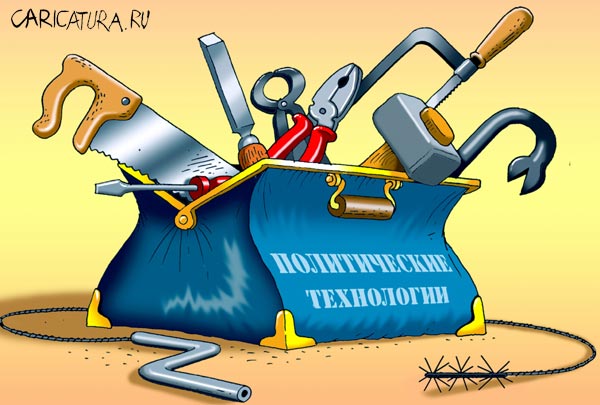
Andrew Wilson has an article out on openDemocracy that provides a taxonomy of post-Soviet political systems and where they stand in terms of their employment of "political technology."  The piece is interesting for its anecdotes, and I've always been a big fan of Andrew Wilson's work introducing Westerners to the concept of "political technology."  Some of the main ideas from his seminal 2005 book, Virtual Politics, are outlined in a shorter format in these remarks of his from a few years ago.

The questions that Wilson really seems to be asking with this new article - why do governments of states like Russia and Kazakhstan bother orchestrating falsely competitive elections? what is it about the political culture of certain post-Soviet states that has allowed them to more or less leave the pervasive use of "political technology" behind? are some of these countries destined to remain in some sort of political purgatory, having left behind the "hell" of an authoritarian one-party state but never reaching the "heaven" of the (ultimately unattainable) idealized, squeaky-clean, competitive political system extolled by classic democracy promoters? - are very good ones and have concrete policy applications in addressing Western approaches to other political systems now in transition in the Arab world and elsewhere, not to mention American budgets for the variety of activities that fall under the umbrella of "democracy promotion."

The clarity of the current article's thesis, though, suffers a bit from the author's implication that political dark arts and even practices as benign as the manufacturing of artificial campaign narratives are somehow unique to the post-Soviet space and are something that should be "gotten rid of" as these countries move toward some democratic ideal. 

Is it possible that Wilson believes what he calls the "highly developed industry of political manipulation" that exists in Russia and elsewhere in the region is not in many respects an imitation of our own political system with many more rough edges (and a much smaller price tag, at least when compared to American electoral politics)?  The ghost of Lee Atwater, along with generations of dirty tricksters (from both of America's august major political parties) - not to mention a fella named Breitbart - would beg to differ.


[image source - "history reveals that smear campaigns are as American as apple pie"]

I'm not proposing throwing in the towel and allowing moral relativist "whataboutism" to triumph by making us all shrug and say our systems are no better - because that's not the case.  However, I'm not sure how much we do for the cause of "democracy," however one defines it, by lumping in things like politicized judges, politicians advancing the causes of favored business interests, and advanced political campaigning - which has become a career track and educational specialty in its own right in the U.S. in recent years and includes what Americans call "dirty tricks" and Russians call "black PR" - with factors more uniquely present (one hopes) in the transitional, soft- or hard-authoritarian political systems that Wilson writes about - actual ballot-rigging, the use of law enforcement to muzzle political opponents and domination of the media space by the government.

I also take issue with Wilson's assessment that Moldova became one of the post-Soviet world's "serious potential democracies" only in 2009, but that's another story...

Wednesday, May 28, 2008

Russian popular opinion on the "frozen conflicts"


The Russian Analytical Digest (RAD) is a valuable resource; each issue focuses on a different topic (almost always something highly relevant to current events) and has essays as well as polling data. A recent issue focused on the "frozen conflicts" (even as that term comes to seem less and less apt) in Georgia. The lead essay provided a good overview of the ongoing tension between Georgia and Russia over Abkhazia and South Ossetia and incorporated some of the ideas that were discussed at a recent conference on the "frozen conflicts" that I was fortunate enough to attend.

One interesting thing that the RAD often does is put together relevant polls on whatever topic the issue is covering, often using Russia's major polling outfits. Even though one of them has been compromised after its director received an award from Putin for his work during the recent election campaign, their polls are still probably the best ways to follow the changes in Russian public opinion over a span of years. Here are a few of RAD's graphical summaries of their polling data on Abkhazia and South Ossetia (click on them to enlarge if you can't read the fine print):


Russia's third major polling agency, FOM, also had a report in early April about the situation surrounding Abkhazia, with some interesting analysis about the changes in Russian public opinion about the secessionist region over the years:

And how have the events in Kosovo affected Russians' attitudes toward the Abkhazian problem? Reference to the example of Kosovo is encountered fairly rarely among the arguments advanced by those in favor of recognizing Abkhazia's independence - in just 2% of the responses: "how is it any worse than Kosovo?"; "America recognized Kosovo, and we need to recognize Abkhazia"; "in connection with Kosovo - likewise." [these are quotations from FOM's respondents]

There is, however, another number, which obviously demonstrates that the events in Kosovo have put Russians noticeably on guard. Since October 2006, the portion of our fellow citizens who believe that Russia should recognize Abkhazia's independence has declined by 12% - from 51% to 39%. Correspondingly, the percentage of respondents who found this question difficult to answer increased from 30 to 45%. The answers to the free-form questions prevent us from concluding that support in Russia for Georgian sovereignty over the region has increased. More likely, we should conclude that solidarity with Serbia and feelings of sympathy for the "brother Slavs" related to their loss of Kosovo forced some Russians to begin to doubt whether it is desirable or acceptable to promote separatist tendencies wherever they may arise - including in Georgia.
The FOM question discussed in the bit I translated above was worded as follows (the graphic is from the same report):

In 1999, Abkhazia declared its statehood and independence [from Georgia]. Other countries have not recognized Abkhazia's independence. Do you think that Russia should or should not recognize Abkhazia's independence?


(left column - should [recognize]; center - should not [recognize]; right column - difficult to say)
(blue - July 29-30, 2006; purple - Oct. 7-8, 2006; yellow - March 29-30, 2008)

The latest chapter (or perhaps the latest paragraph in the latest chapter) in this very long story would seem to be this report.

Sunday, November 11, 2007

Vertical of bureaucrats?

Vertical of Power (chairs)
[image source]


When I first saw Mikhail Khodorkovsky's missive about the importance of voting in the coming elections (the scanned letter, handwritten on school notebook paper, is worth checking out even if some might find MBKh's handwriting challenging in spots) on Ekho Moskvy's elections blog, I planned to translate it. Sean has beat me to it, and the letter has sparked a bit of a discussion at SRB.

But I wanted to focus on one of the things MBKh mentioned in his letter (my translation):
The bureaucracy, and today it in particular is our chief opponent, feels quite comfortable in an environment of social apathy. For the bureaucracy, this [environment] is a confirmation of their monopolistic right to rule the country as they see fit.

It is precisely the fact that citizens are prepared to entrust their choice, their fate, to a little-known bureaucrat that proves to them that it is unnecessary to take into account even minimally the opinion of the people.
Khodorkovsky's conclusion was that people should vote for any the less odious of the smaller parties. I wonder what he would be recommending if Russia still had the "against all" option on the ballot, as it has in previous election cycles.

Veronica at Neeka's Backlog ignited a comments clusterf*** (to use an ATL term, though I'm mildly ashamed to reveal that I read that blog regularly enough to know the local lingo) earlier this fall by declaring her intention to vote against all in the Ukrainian elections, so I guess some regard this as a cop-out option and one that concerned citizens should not take, but I think it is a good option to have on the ballot, and getting rid of it was of a piece with some of Putin's other reforms which strongly enhanced the "management" of Russian democracy. Actually, the Viitorul (Future) Institute's website, where I found the above image, has another poster which is applicable to one of Putin's more spectacular verticalizations of power in Russia:

Democracy without local autonomy is like a ladder without rungs
[image source]

But back to MBKh's focus on the bureaucracy as the rot at the core of the Putinist system. This seems to be one place where the opposition could gain some traction with the public - anyone who has confronted corrupt or indifferent bureaucrats in Russia (or anywhere else, for that matter) knows that such experiences can leave very strong feelings. The Moscow Times had a series of a few articles about various sdownsides of overbureaucratization during this year's slow August news period, though they weren't focused on grass-roots anti-bureaucrat sentiment.

But that sentiment is certainly there - a FOM poll earlier this year found that 23% Russians rated "bureaucracy, arbitrary rule by officials" as an annoying problem, a higher percentage than were annoyed by "lack of money for food and other goods" or "bad roads." And if you add in the 14% who noted "the poor performance of housing and public services" and the 14% who noted "corruption in regional government and legal institutions" as annoying (respondents were allowed to name up to five problems), it's obvious that a fairly large number of people are unhappy with the services they get from their flush-with-cash government.

The government deals with this by using their near-monopoly on the broadcast media to periodically publicize demonstrative anti-corruption crusades and by passing periodic pension increases, and so far it seems to be working - I doubt that any of MBKh's non-loathsome small parties will clear the barrier to enter the Duma, especially since it was hiked up a couple of percentage points by Putin in his earlier reform of the electoral process.

Tuesday, September 25, 2007

The end of the Putin Era (?) in posters

The folks at Grani.ru, who brought us the Free Khodorkovsky! poster contest a few years ago, have updated the contest concept for the 2007-08 political season. This time, the theme of the contest is "The End of the Putin Era." The contest asked artists to respond to a few questions:
What awaits the country in 2008? When and how will the ruling regime in Russia change? What are the results of Putin's rule? Where will the new leaders take Russia?
I've decided to post a few of these posters here and will even attempt (no doubt futilely, in some cases) to explain the humor or multiple meanings behind some of them.

First, a few of my favorites:

This one I love because it's a photo that anyone in Moscow could have taken - a photo of
an ad for Putinka vodka's toast hotline underneath the sign for the Lubyanka metro station.


This one positions a glass in front of a bunch of bottles of
Putinka in such a way that letters spelling "Kaput" are hightlighted.


Self-explanatory.

This one I liked because it represents the role of broadcast media in inflating
the popularity ratings or visibility of various public figures in Russia (the 1 on the
pump is the logo of the state-run Channel 1 network, also known as ORT).

Represented are Putin, Ivanov and Medvedev, and also, among others, Ksenia Sobchak
(who's sort of like Russia's answer to Paris Hilton) and ORT political commentator
Mikhail Leont'ev, who was already delivering blisteringly anti-American monologues a
few years ago, so I can only imagine what he's progressed to lately.


"A king is made by his retinue," reads the poster, which has the king surrounded by
sixes ("шестёрки") of various suits. In Russian slang, to be someone's "шестёрка"
means to be their "flunky" or "gofer" (according to Multitran), but to give the word its
proper prison slang meaning (since VVP likes to throw around a bit of prison slang
himself now and again), it's best translated in this context as being someone's bitch.


A number of the posters dealt with the possibility that Putin might stay in power or continue to run things from behind the scenes, and with the Russian electorate's lack of choices:

This is another great play on an image from pop-culture: "лохотрон" means any kind
of a scam designed to ensnare suckers or "лохи." The smaller text reads "the future does
not depend on you." The reference is to an ad campaign by mobile telephony provider
Megafon, which had the tag line "the future depends on you." Megafon was originally a
St. Petersburg-based company (Northwest GSM) which exploded onto the national scene
in the early years of Putin's rule, allegedly thanks to help from Putins telecoms minister
Leonid Reiman, who supposedly has an interest in the company.


The lenses of the glasses read "the end of the Putin era," and the
text below reads "visible only through rose-colored glasses."

Pretty much self-explanatory; the small print
reads, "I'll make you an offer you can't refuse..."

The hand is making the "fig," a hand gesture sort of (though not entirely) like giving
someone the finger in the US. The gesture can be used in Russia to signify refusal
when asked to do something, as if to say, "like hell I will." The creative tilting of
the 8 in 2008 to make the infinity symbol suggests who is telling whom to go нафиг.


Another frequently recurring theme in the posters submitted for the contest was Russia's oil wealth, and all of its consequences - from international braggadocio to domestic dependency to good old-fashioned class struggle:

Self-explanatory.

"We are sitting well!"
This expression can mean "everyone's having a good time" when used in the
context of a social gathering; but "to sit on the needle" or "become seated on the
needle" is Russian slang for becoming hooked on intravenous drugs.

"The Chekists are on duty until the last drop..."

This one may be my very favorite, because it incorporates themes of both oil
wealth and the power of the broadcast media. The figure with its feet propped
up on the barrel of oil is labeled "the authorities" (власть can be a difficult word to
translate), and the submissive figure watching TV is labeled "the people."
The caption below reads "an earth-shaking (or 'epochal') age."

Friday, September 21, 2007

A typo about trust

In keeping with our intermittent tradition of highlighting unintentionally amusing statistical typos, here's a recent example from a recent article by news agency Moldova Azi (Moldova Today), which is often plagued by poor English translations:
Among politicians, incumbent Moldovan President Vladimir Voronin is still enjoying the highest trust among compatriots, though his popularity rating is only 15.9%. Following far behind him are the new Chisinau Mayor Dorin Chirtoaca (5.6%), Parliament Chairman Marian Lupu (3.3%), Prime Minister Vasile Tarlev (2.7%). Over 387% respondents stated they did not trust anybody, and 22.4% preferred to mention no names at all.