
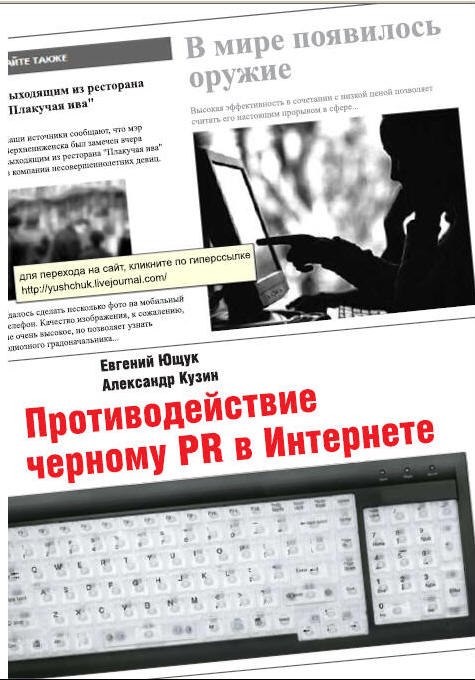
The article below reminded me of how widespread the concept of "black propaganda" or "black PR" is in Russian political life (and in the competitive world of business as well). The term is sort of a catch-all for any kind of "dirty" campaign tactics, from American-style opposition research, "dirty tricks" and negative campaigning to mud-slinging, sabotage and the dispensing of kompromat. Anyway, I found more illustrations for a post on this topic than I expected - all of the images here are book covers, which suggest that fictional accounts of and instructions related to "black PR" - and how to defend yourself from it - are in demand in Russia. As a bonus, here are a couple of fliers which serve as examples of "black PR" in Moldova; and the second image at this post is one from the 2004 campaign in Ukraine.

BBC Monitoring [courtesy of JRL]
Woman appeals to Putin, says One Russia owes her for 'black propaganda' - RenTV
August 2, 2010
A scandal has erupted in Suzdal, Vladimir Region over last year's mayoral elections, Russian privately-owned REN TV reported on 2 August. A young woman, Vera Nesvyashchenko, has written to Prime Minister Vladimir Putin, complaining that she has not been paid for work she carried out for the One Russia party during the election campaign, which involved destroying opponents' campaign materials, and that the work she was asked to do was not entirely legal.
"The letterboxes were checked, there were some campaign materials there, we removed them; there were posters hanging on the poles, we tore them down and (it became) waste paper. All of the waste paper we brought to the headquarters, to the town library," she said.
Nesvyashchenko admits that she was engaged in "black propaganda", the correspondent notes. She was recruited by One Russia to work on the mayoral elections in August 2009 and was promised R7,000 (235 dollars) to destroy opponents' campaign materials, plus a bonus of R7,200 to compile a list of people who were intending to vote for One Russia's candidate Olga Guseva.

Nesvyashchenko also says that she and her colleagues questioned the legality of their actions but were assured that everything was above board.
"Tatyana Aleksandrovna said that it's no problem. The period of validity for campaign posters is three hours so you can safely clean up the streets," she said. "Only in court did I find out that it was illegal and hooliganism," she added.
The correspondent noted that 5,000 people (52 per cent of the overall number of voters) cast their ballots in the mayoral election in Suzdal - a record turnout.
"At the finish, the gap (between the candidates) was minimal. Olga Guseva received just 111 votes more than her opponent Oleg Grigorenko. It is not known what the state of affairs would have been, if there had not been the so-called guards (referring to Young Guard, the youth wing of the ruling One Russia party) and their mass clean-up operation."
Grigorenko unsuccessfully appealed against the election result, the correspondent noted.
The head of the regional branch of One Russia, Sergey Borodin, called Nesvyashchenko's actions "provocation". However, the former mayor of Suzdal, Sergey Gadunin, who held the post from 2005-2009, defended her.
"I have read some commentaries which said that this is an attempted smear on the part of the opposition. You know, the opposition can have a rest. There is no need to do anything more. The party is discrediting itself in such a way that there are simply no further words," Gadunin said.
Nesvyashchenko is also preparing a lawsuit, demanding the payment of the R14,200 and a further R5,000 for moral damage.


No comments:
Post a Comment